
Custom Medieval Banners & Flags – Handmade Heraldic Designs

Bring your vision to life with our handcrafted medieval banners and Renaissance flags. We specialize in creating authentic, high-quality heraldic designs for historical reenactments, LARP events, weddings, castle decor, and more.

Choose from premium tribute satin — a smooth, delicate fabric with a natural shiny luster. All banners are printed in full color on both sides, with custom sizes from 2'x3' to 5'x12' — or any dimension you need.

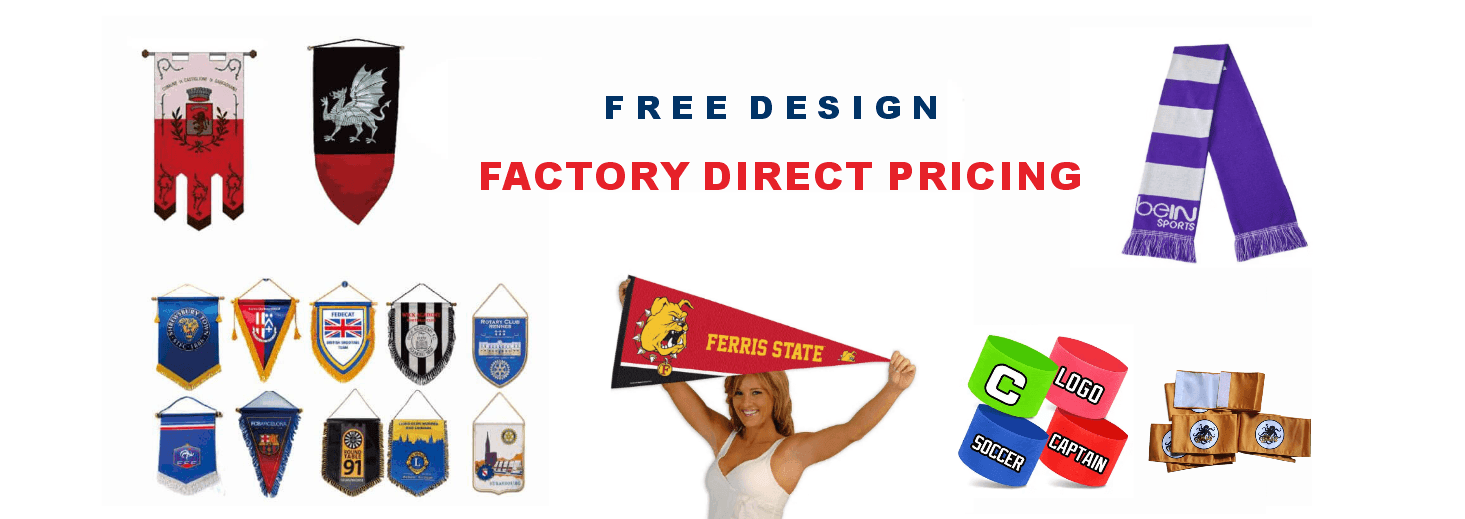
Our service includes free design assistance — send us your logo, crest, or idea, and our team will create a professional artwork for you at no extra cost. Plus, enjoy free shipping worldwide and door-to-door delivery from the USA.

Whether you're decorating a wedding hall, leading a knightly troop, or building a fantasy kingdom, we help you stand out with a banner that tells your story.

Red dragon medieval banner on black wool – perfect for LARP, reenactment or fantasy wedding
Blue Renaissance flag with gold fleur-de-lis on satin – elegant castle wall decor or historical event
Custom family crest medieval banner in red and gold – personalized for weddings or heritage events
Medieval banners displayed in castle hall – ideal for weddings, festivals or immersive decor
Close-up of custom medieval flag with detailed embroidery and rich texture
Renaissance house standards with heraldic symbols – perfect for historical events and castles
Custom wedding banner with lion and unicorn – ideal for royal-themed ceremonies
Italian Renaissance house flag with intricate coat of arms – authentic European style

Handcrafted Medieval Banners – Made Just for You

Medieval banners are a unique style of hanging flags that add a touch of Celtic and Renaissance elegance to your home, banquet halls, studios, LARP events, or weddings. Crafted from high-quality knit polyester or luxury tribute satin, every banner is fully customizable in size, shape, color, and style.

Various medieval banner designs – shield-shaped, pennant, rectangular with heraldic symbols
Medieval banner pole kit – wooden rod, rope, finial, and mounting hardware

Customization Options & Materials

Fabric Options

Knit Polyester: Durable, weather-resistant, vibrant colors – ideal for indoor & outdoor use. Cost-effective and fade-resistant.

Tribute Satin: Luxurious, smooth, naturally shiny – perfect for indoor display. Colors appear richer and last for years.

Size & Shape

Any Size: From 2'x3' to 5'x12' (or larger). Compatible with wooden flagpoles.

Any Shape: Rectangular, swallowtail, pennant, shield-shaped – if you can imagine it, we can make it.

Printing & Construction

Single-Sided: Design printed on the front fabric, with a white backing and a non-woven middle layer for opacity and durability. All layers are stitched together for a smooth, professional finish — suitable for banners up to 5'x21'.

Double-Sided: Premium option with full-color graphics printed on both sides. Each side is clearly visible from its respective angle, ideal for hanging in open spaces like halls or outdoor venues.

Embroidered Banners: For a truly luxurious and heirloom-quality finish, we offer hand-guided machine embroidery. Your crest, motto, or emblem is stitched directly into the fabric using high-sheen polyester or silk threads. Embroidery adds texture, depth, and timeless elegance — perfect for ceremonial use, family crests, guild standards, or wedding decor. Best suited for satin or heavy-duty woven fabrics, and recommended for indoor display to preserve thread luster.

Medieval banner designs – Crusader-style red and silver flags in various shapes including shield, pennant, and swallowtail
Luxurious medieval banner styles – red and gold ceremonial flags with tassels, ornate edges, and decorative finials

Full Free Design & Free Shipping & Great Price

• Minimum Order: Just 1 piece! The more you order, the bigger the discount. Orders over 10 pieces (any size combination) qualify for our best bulk pricing.

• Free Design Service: Don't have artwork? No problem! Send us your logo in AI, CDR (vector preferred), or high-resolution JPG/PDF/PSD. Our professional designers will create a custom medieval banner design for you — absolutely free.

• Standard Sizes Included: The prices below cover your custom medieval banner (full-color printed), a matching wooden pole, and free shipping worldwide.

• Fully Customizable: Need a unique size or shape? We can make it! From small 2'x3' wall banners to massive 10'x50' (305x1520 cm) stage backdrops — all crafted to your exact specifications.

• Fast Turnaround: Only 15 working days from design approval to delivery — with free shipping included.

Custom Medieval Banner Pricing (USD)
Size/Price 1 3 5 8 10
2'x4' $169.00 $139.00 $119.00 $109.00 $99.00
2'x6' $199.00 $169.00 $149.00 $139.00 $129.00
Common sizes: 2'x9', 3'x6', 3'x9', 3'x12', 5'x12', 5'x20', etc.
No hidden fees.
Transaction Process: Free Design → Approval → Invoice → Payment → Production → Free Shipping
Custom medieval banner mounted on a wooden pole with rope and finial – ready for display
Collection of custom medieval banners in various shapes and colors – including shield, pennant, and swallowtail designs
Medieval-style guild flags featuring heraldic emblems and crests – ideal for historical reenactments or themed events

Related Information

The Complete Guide to Custom Medieval Flags: Heraldry, History, and Modern Craftsmanship

Custom medieval flags occupy a unique place in the world of textile craft. They are not simply decorative objects; they are functional artifacts of a visual language that governed identity, allegiance, and rank for centuries. A heraldic banner carried a knight's entire legal and social standing in a single piece of fabric. A standard identified a nobleman's retinue across a battlefield. A pennon marked the presence of a mounted knight before the age of standing armies. When you order a custom medieval flag today, whether for a historical reenactment, a heritage event, a themed venue, or a personal collection, you are engaging with a tradition that stretches back to the High Middle Ages. This guide covers the three principal forms of medieval flags, the rules of heraldic design that give them meaning, the materials and techniques used to make them, and the practical considerations for ordering a piece that is both historically grounded and built to last.

The Three Principal Forms: Pennon, Banner, and Standard

Medieval sources are consistent on one point: flags were not interchangeable. Their form, size, and decoration were regulated by the rank of the person who bore them. The three principal varieties in use during the Middle Ages were the pennon, the banner, and the standard. Understanding the difference is essential before commissioning a custom piece, because the shape and proportion you choose will determine whether the flag reads as historically plausible.

The Pennon: The Knight's Small Ensign

The pennon was the smallest of the three and the mark of knightly rank. It was generally triangular, pointed, or swallow-tailed at the fly, and it was borne immediately below the lance-head. Because it was attached to a weapon rather than a pole, the pennon's design had to remain legible when the lance was held horizontally. Heraldic charges on a pennon were therefore arranged differently from those on a static banner: they were positioned so that they would appear upright when the weapon was couched for the charge. Many surviving examples are depicted on monumental brasses, and they were often richly fringed with gold, reflecting the bearer's status. A modern custom pennon works well as a smaller display piece, a lance-mounted reenactment accessory, or a compact heraldic accent for a themed interior.

The Banner: The Square or Oblong Coat of Arms

The banner was square or oblong in form and bore only the coat of arms of the owner. It was carried by Knights-Bannerets, nobles, princes, and sovereigns. The banner's defining characteristic was its directness: it displayed the full armorial achievement without the additional badges, mottoes, or supporters that could appear on a standard. Its square or near-square proportion made it suitable for display on a static pole, a wall, or a tent, and it became the standard format for identifying a nobleman's presence in a fixed location. For modern orders, a custom heraldic banner is the most versatile choice: it fits a wall display, a ceremonial pole, or a backdrop, and its shape is immediately recognizable as the classic "coat of arms on fabric" format.

The Standard: Length, Rank, and Livery

The standard was of much larger proportions than the banner and was elongated and tapering, often with a rounded or split end. Its size was strictly regulated by the owner's rank. English sources prescribe, for example, a duke's standard at seven yards in length, a banneret's at four and a half yards, and a knight-bachelor's at four yards, with the king's running to eight or nine yards. The standard carried not only the owner's arms but also badges, mottoes, and the livery colors of his retainers, making it a mobile statement of a noble household's entire identity. For reenactment and heritage display, a custom standard is the most dramatic format: its length and taper create a silhouette that is unmistakably medieval, and its larger surface area allows for the complex multi-element designs that period sources describe.

Heraldic Design: The Rules Behind the Visual Language

A medieval flag without correct heraldry is simply a patterned cloth. The visual grammar of heraldry is what gives these objects their authenticity and their meaning. If you are commissioning a custom medieval flag for a reenactment group, a heritage organization, or a personal coat of arms, understanding the basic principles will make the design process far more productive.

Charges turn to the staff. In heraldic flags, the figures and devices on the field are oriented toward the pole, not toward the viewer. This is a practical rule rooted in how flags were carried: the bearer held the staff, and the charges were meant to appear upright when the flag was flying from that staff. A lion rampant on a banner, for example, should face the hoist, not the fly. This is one of the most common errors in modern custom designs, and correcting it is one of the fastest ways to make a flag feel historically grounded.

Tincture rules still apply. The heraldic prohibition against placing metal on metal (gold on silver, or yellow on white) and color on color (red on blue, green on black) exists for a practical reason: contrast. At a distance, and in the mixed light of a hall or a field, low-contrast combinations become unreadable. A custom medieval flag that follows the tincture rules will read more clearly from across a room and will look more like a period artifact. If a modern client requests a combination that violates the rule, a skilled designer can often find a workaround (adding a fimbriation, or border, between the two elements), but the underlying principle is worth preserving.

Simplicity at distance. The best medieval heraldry was designed to be recognized from far away. Complex scenes, fine detail, and small text were not the norm on functional flags. If a design requires a viewer to stand within arm's length to understand it, it is not working as a flag. For custom orders, this means prioritizing the central charge (the shield, the crest, or the principal badge) and treating secondary elements as supporting information rather than competing focal points.

Materials and Techniques: From Heavy Linen to Modern Digital Printing

Historical medieval banners were made from the textiles available to their makers: heavy linen, wool, and silk were all in use, with the choice often determined by the wealth of the patron and the intended function of the flag. Surviving examples and documentary sources describe painted linen, silk banners with silver leaf, and embroidered or appliquéd pieces where the design was built up from layers of fabric rather than applied with dye. The common thread across these historical techniques is that the decoration was integrated into the fabric's structure or surface, not printed onto it as a thin layer.

Modern custom medieval flags can honor that tradition while benefiting from contemporary materials science. For reenactment and display, heavy linen remains a popular choice because it hangs with the weight and drape that period sources describe; a flag that is too light will flutter in a way that reads as modern rather than medieval. Cotton velvet and other heavier fabrics are used for high-status interior banners where a richer surface is appropriate. For outdoor events and high-traffic environments, durable polyester offers moisture resistance and colorfastness that historical fabrics cannot match, and modern dye-sublimation printing can reproduce complex heraldic designs with a precision that painted or appliquéd originals could only approximate.

The practical implication for a custom order is that material choice should follow use case. A flag intended for a reenactment camp, where it will be handled, folded, and exposed to the elements, benefits from a fabric that resists creasing and moisture. A flag intended for an indoor hall or a ceremonial display can justify a heavier, more tactile material. And a flag intended for repeated outdoor use in a heritage event program should be specified with reinforced stitching and durable attachment points from the outset, because a medieval flag that fails at the grommet or the hem is not fulfilling its function, regardless of how accurate the heraldry may be.

Modern Applications: Reenactment, LARP, Heritage Events, and Themed Venues

The contemporary market for custom medieval flags is broader than many people expect. The largest and most exacting segment is historical reenactment and living history, where flags are not props but equipment. A reenactment group portraying a specific period and rank needs a flag whose shape, proportion, and heraldry can withstand scrutiny from fellow reenactors and from the public. A knight's pennon on a lance, a nobleman's banner on a static pole, and a household standard with livery colors are all functional elements of an encampment or a battle display, and their accuracy contributes directly to the credibility of the overall impression.

LARP (Live Action Role-Playing) and SCA (Society for Creative Anachronism) communities form another major segment. SCA events, in particular, place a strong emphasis on heraldic display: banners, standards, and pennants are among the most visible expressions of a participant's persona and household identity. For these orders, the design requirements are often highly individualized, and the ability to translate a personal heraldic device into a durable, correctly proportioned flag is the core of the service.

Beyond the reenactment world, custom medieval flags are used in heritage events, Renaissance fairs, medieval-themed weddings, film and theatre productions, themed hospitality venues, and educational settings. A museum may order a reproduction banner for an exhibition; a theatre company may need a set of heraldic flags for a production; a hotel or restaurant with a medieval or fantasy theme may commission banners as permanent decor. In each of these cases, the underlying requirement is the same: a flag that looks and behaves like the historical object it references, rather than a printed graphic that happens to be shaped like one.

From Battlefield to Podium: The Enduring Logic of Display

There is an unexpected continuity between the medieval standard and the modern ceremonial banner. The medieval flag existed to identify a person or a household in a public space, to make rank and allegiance visible at a glance, and to occupy the visual center of a gathering. A Custom Podium Banner performs a remarkably similar function in a contemporary setting. It hangs on the front of a lectern at a graduation, a church service, or an award ceremony, placing a crest, a logo, or an institutional emblem exactly where the audience and the camera are focused. The scale is smaller and the heraldry has become institutional branding, but the logic is the same: the object marks the place where authority speaks and makes identity visible in a shared ceremonial space.

For organizations that operate across both worlds — a reenactment group that also hosts public events, a heritage site that runs educational programs, or a venue that commissions both historical banners and modern ceremonial displays — the two product categories can share a single design sensibility. The same attention to proportion, contrast, and legibility that makes a medieval banner read correctly on a field also makes a podium banner read correctly on a stage. The materials and the printing technology differ, but the principle of designing for the viewing distance and the occasion does not.

Ordering Considerations: Proportion, Attachment, and Proofing

When commissioning a custom medieval flag, a few practical questions will shape the final product more than any other.

Proportion matters more than absolute size. A pennon and a standard are defined as much by their length-to-width ratio as by their total area. A "large pennon" that is proportioned like a banner will not read as a pennon, regardless of its dimensions. If the goal is historical plausibility, start from the proportions of the form you have chosen and scale from there, rather than starting from a desired size and adjusting the shape to fit.

Attachment method follows form. A pennon mounted on a lance needs a different sleeve or attachment than a banner hung from a crossbar or a standard carried on a pole. For reenactment use, it is worth specifying the pole or lance diameter at the time of order so that the sleeve or ties are sized correctly. A flag that is well made but poorly attached will not perform as intended.

Proofing is not a formality. Heraldic designs contain many small decisions — the orientation of a charge, the exact shade of a tincture, the spacing of a motto — that are difficult to evaluate on a screen and even more difficult to correct after production. A digital proof reviewed at the intended viewing distance, and ideally compared against a reference image or a blazon, catches most of these issues before they become permanent. For custom medieval flags, where the design carries meaning beyond decoration, the proofing stage deserves more attention than it typically receives.

Why Custom Medieval Flags Still Matter

A custom medieval flag is a physical argument about identity. It says, in fabric and thread, that a person, a household, or an organization belongs to a tradition and occupies a place in a visual order. The medieval world understood this with great sophistication: the shape of a flag told you the rank of its bearer before you could read a single charge, and the arrangement of those charges told you who they were and what they claimed. That grammar has not lost its power. Whether the flag will fly over a reenactment camp, hang in a heritage hall, or serve as a centerpiece for a themed event, the object succeeds when it is made with the same seriousness that its historical predecessors demanded — correct in proportion, legible in design, and durable enough to do its job in the real world.

Ready to bring a heraldic design to life? Send us your blazon, reference image, or sketch, and our team will create a free digital proof for your approval.