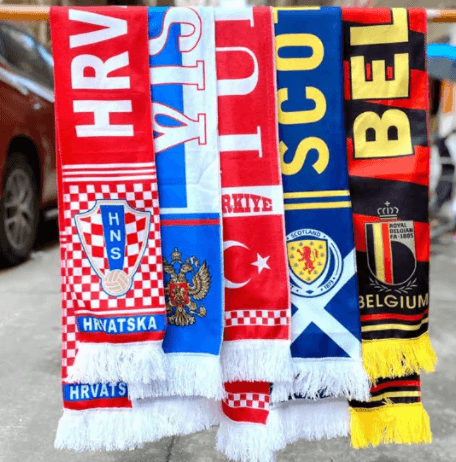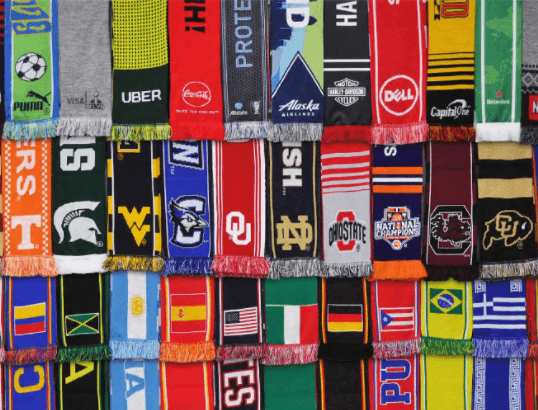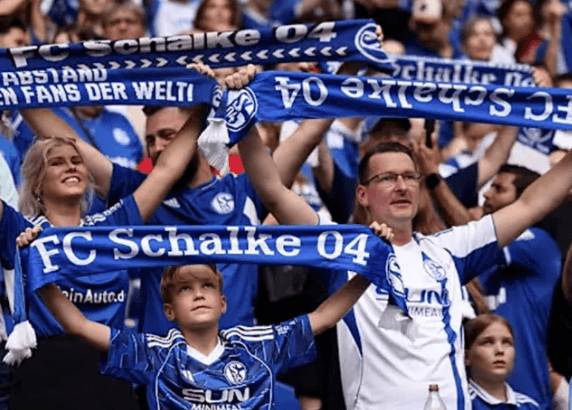

Premium Custom Soccer Scarves & Wholesale Custom Soccer Scarf Manufacturer

As a trusted wholesale custom soccer scarf manufacturer, we specialize in producing high-quality custom soccer scarves that capture the true spirit of the game. Whether you are outfitting a professional club, a local youth league, or organizing a massive stadium campaign, our factory-direct approach ensures you receive premium fan merchandise at competitive wholesale prices.

We provide a comprehensive range of high-quality materials—including soft acrylic, warm wool blends, and durable polyester—along with versatile standard sizes to guarantee the perfect fit for every supporter. With streamlined production, low minimum order quantities, and no setup fees for small batches, we make it seamless to bring your unique team vision to life.

From vibrant, full-color heat transfer prints to traditional double-sided knitted patterns, our custom soccer scarves deliver unmatched quality, comfort, and authentic fan spirit for every occasion. Ready to elevate your team's merchandise? Upload your logo and get a free quote today!
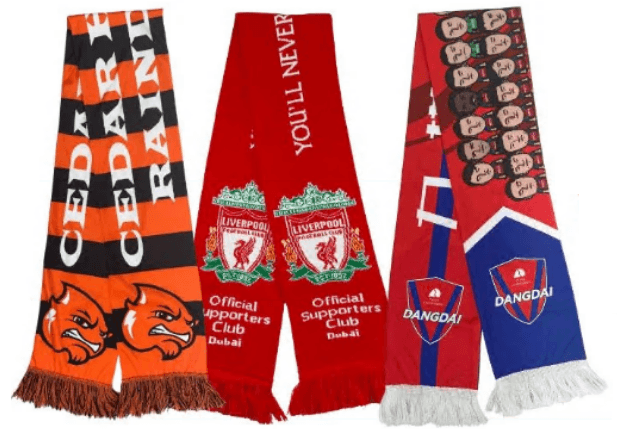
Custom Soccer Scarf Manufacturing: Heat Transfer & Knitted Options

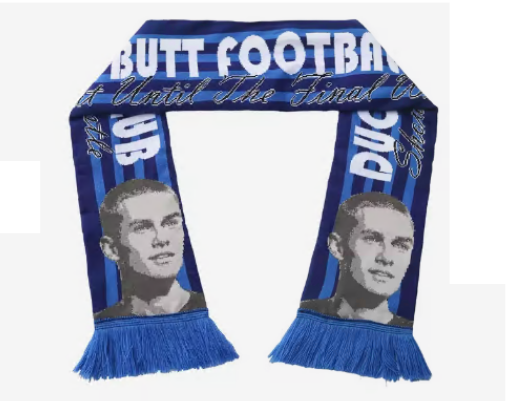
Heat transfer printing is a highly versatile digital printing method that directly applies high-resolution graphics onto the fabric. Its greatest advantage is the complete freedom from color limitations, allowing for the flawless reproduction of complex gradients, photographic details, and sponsor logos on every custom soccer scarf. Unlike traditional woven methods, this process requires no setup fees or screen costs, making it the most cost-effective and efficient solution for small-batch custom soccer scarves and intricate fan merchandise designs.

1. Heat Transfer Printing: Custom Soccer Scarf (Heat Transfer)

This digital printing method is ideal for small-batch custom orders and intricate fan merchandise. It directly applies high-resolution graphics onto the fabric, offering complete freedom from color limitations and requiring absolutely no setup fees or screen costs.

  • Vivid & Full-Color Reproduction: Delivers bright, lifelike colors and supports seamless full-color printing for highly detailed designs.
  • Low MOQ of 10pcs: Say goodbye to high setup costs! With a minimum order of just 10 pieces, you can easily test new designs or order small batches without needing custom molds or screens.
  • Durable Polyester Fabric: Primarily printed on polyester or synthetic blends, ensuring the custom soccer scarves are long-lasting, lightweight, and highly resistant to color fading.

2. Standard Knitted: Soccer Scarves Custom (Standard Knit)

Using classic Jacquard Knitting technology, patterns are woven directly into the fabric rather than printed on top. This traditional method creates identical double-sided effects and provides a premium texture that is highly favored by professional clubs and die-hard supporters.

  • Authentic Traditional Texture: Features clear, double-sided patterns with a high-end woven feel.
  • Premium Warmth: Crafted from acrylic, wool, or blended yarns to provide excellent insulation for cold matchdays.
  • Classic Design Focus: Perfectly suited for solid color blocks, bold stripes, letters, and geometric patterns.

3. Super Knitted: Custom Soccer Scarves (Super Knit)

Super Knitted is an upgraded weaving technique that incorporates elastic yarns (such as spandex blends). This advanced method creates a scarf with exceptional stretch and recovery, ensuring a snug, windproof fit around the neck without losing its shape over time.

  • Superior Elasticity: Stretches easily and snaps back to its original shape, providing a highly secure and comfortable fit.
  • Ultimate Comfort & Windproof: Exceptionally soft and skin-friendly, offering maximum protection against cold winds.
  • Premium Fan Merchandise: The ideal choice for high-end supporter customization and winter tournament souvenirs.
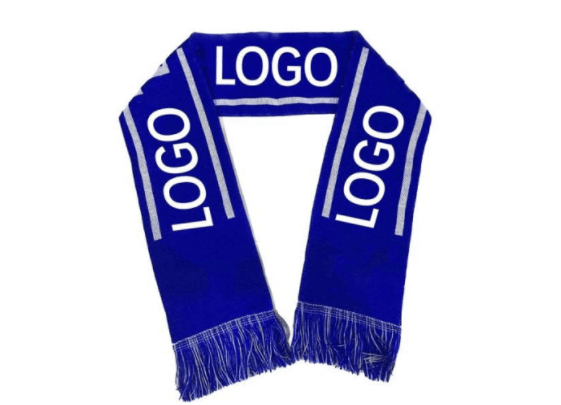
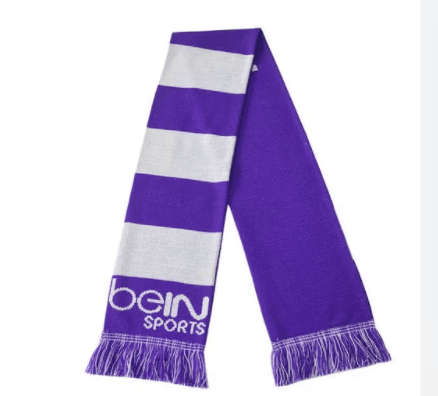
Custom Blue Soccer Scarf with White Logo Print for Fans and Stadium Use

custom soccer scarf logo

Product Specifications

Our scarves are crafted to traditional stadium standards, offering the perfect length for draping around the neck or holding high in the stands. We offer precise sizing for both adult fans and youth supporters.

Available Sizes
  • Adult Standard 55" x 6" (140cm x 15cm)
  • Youth / Kids 47" x 6" (120cm x 15cm)
  • Oversized / Extra Long 60" x 7" (150cm x 18cm)
* Custom sizes available upon request

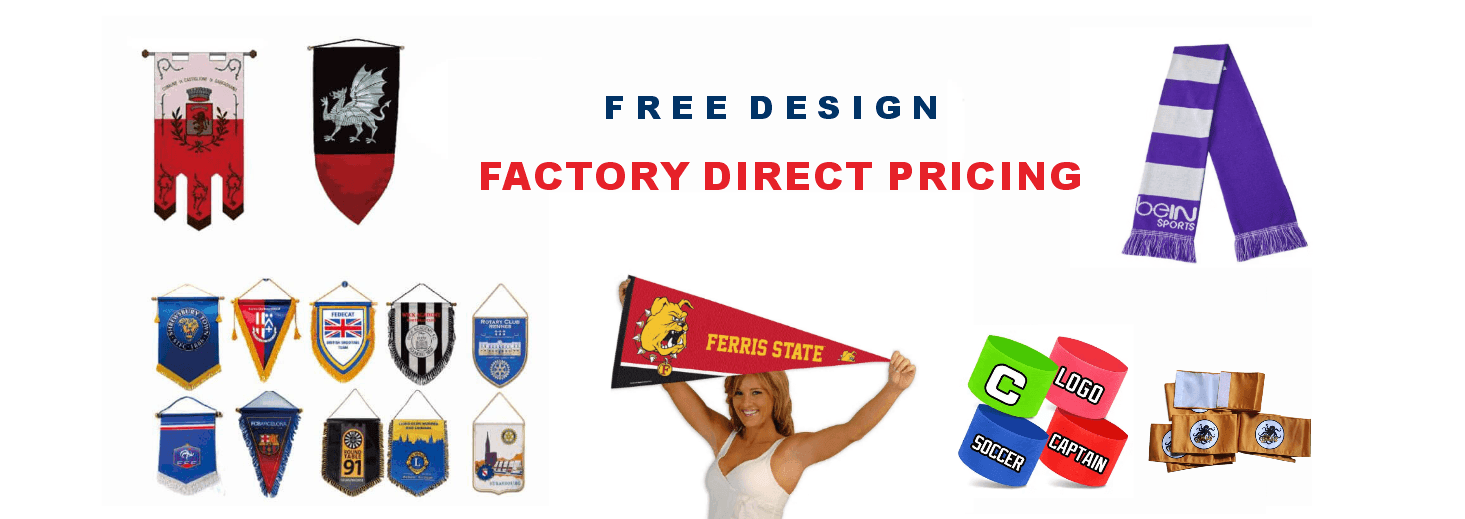
Full Free Design & Free Shipping & Factory Direct Pricing

Have no design artwork? So easy here! Send us your logo (AI, CDR vector file is best, high res JPG, PDF, PSD picture is ok), our designer will help you do the design for free.

The Economical turnaround time from the approval of the design to your receipt is 3 weeks (with free shipping).

Custom Soccer Scarf (Heat Transfer)
Size/Price 10-19 30-49 50-69 70-99 100+
55" x 8" $16.50 $13.50 $11.50 $9.50 $8.00
47" x 6" $13.50 $11.50 $9.50 $7.50 $6.50
Common sizes: 55"x7", 60"x7", 75"x8", 80"x8" etc.
No hidden fees.
Custom Soccer Scarves (Super Knit)
Size/Price 300 500 800 1000 2000
55" x 8" $18.00 $15.50 $12.50 $11.50 $9.90
47" x 6" $15.00 $12.50 $10.50 $9.50 $8.50
Common sizes: 55"x7", 60"x7", 75"x8", 80"x8" etc.
No hidden fees.
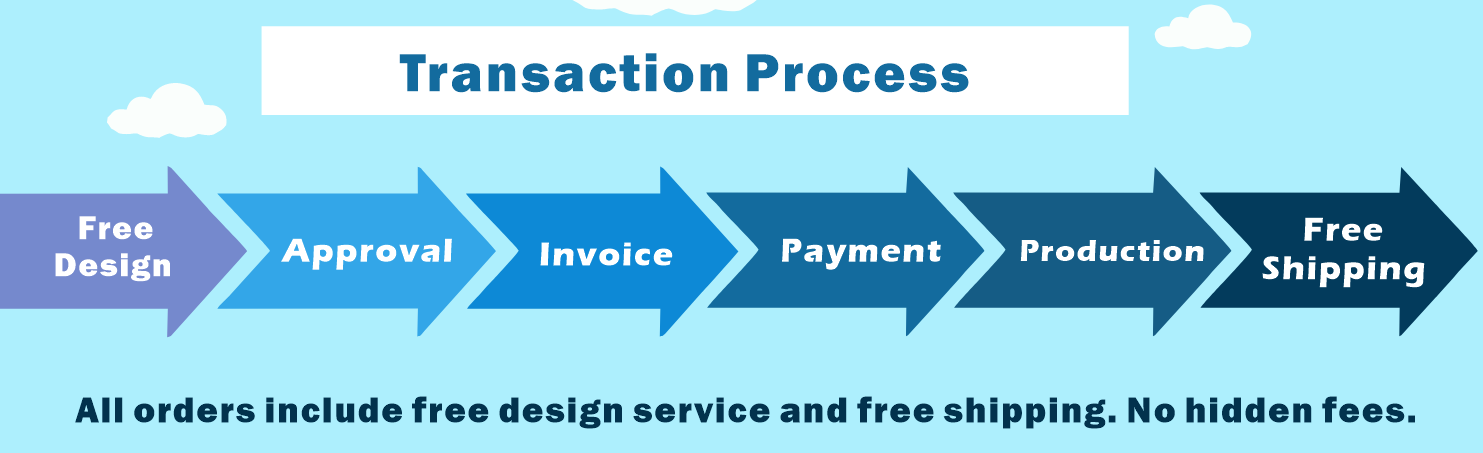
Transaction Process for Custom Soccer Scarves

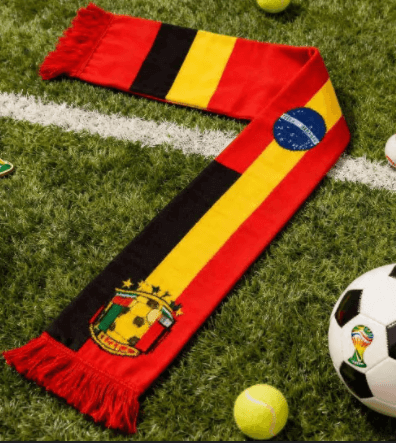
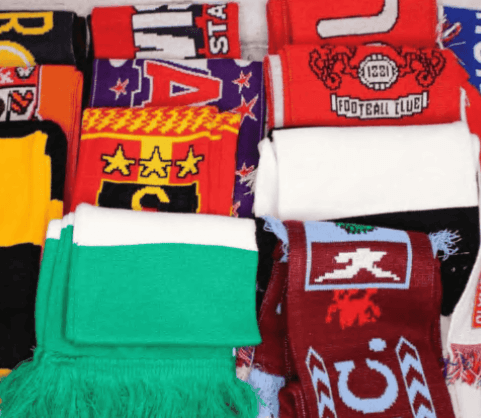
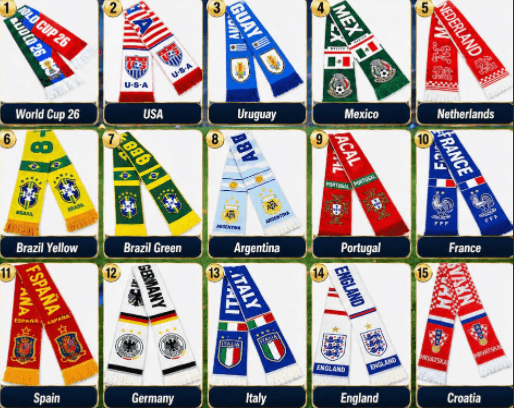
Popular Custom Soccer Scarves Types

Ultimate Guide to Custom Soccer Scarves Manufacturing

Looking for the best custom soccer scarves for your club or event? We specialize in producing high-quality custom made soccer scarves using advanced heat transfer printing and traditional knitting techniques. Whether you need vibrant full-color designs or classic double-sided knitted patterns, our soccer scarves custom service covers all your needs. But choosing the right scarf is not only about picking a logo and a color. The construction method, the yarn, the weight, and the size all determine how the scarf behaves on a terrace, in a photograph, and after a season of regular use. This guide covers the decisions that matter, from the history behind the object to the technical specifications that separate a scarf that lasts from one that does not.

Why the Soccer Scarf Became the Symbol of Football Culture

The soccer scarf was not designed as a fashion object. It began as a practical response to the British winter. The earliest recorded use of scarves at an English football match dates to a 1934 FA Cup fixture, and before that, supporters had already been identifying themselves with hats and caps. But scarves solved a specific problem: football was played in the depths of winter, and standing on open terraces for ninety minutes was cold. A scarf was simply a way to stay warm.

What changed the scarf from clothing into culture was the post-war boom in terrace culture. By the 1960s, scarves had become the primary visual identifier of football allegiance. The 1966 World Cup on English soil accelerated the trend, and by the 1970s, scarves were being held overhead, twirled, and exchanged between supporters. The scarf had become a portable flag—cheaper than a banner, wearable in everyday life, and visible from across a stand.

The object also carries an emotional inheritance that few other pieces of merchandise can match. Fans pass scarves down through families. A scarf bought at a first match is still worn decades later. This is why the material and construction of a custom soccer scarf matter more than they might first appear: a cheap scarf that pills, fades, or loses its shape after a handful of washes is not just a bad product; it is a broken keepsake.

Knitted Jacquard vs. Heat Transfer Printing: The Core Manufacturing Decision

Every custom scarf order comes down to a fundamental choice between two production methods. Each produces a different object, and each is right for a different use case.

Knitted Jacquard: The Traditional Standard

Knitted jacquard is the construction method that defined the football scarf. In jacquard knitting, the design is built into the fabric itself. A computerized knitting machine controls individual needles to interlace colored yarns, creating the pattern stitch by stitch. The design is not printed on top of the fabric; it is the fabric. This is why jacquard scarves have a texture that printed scarves cannot replicate: the raised knit surface, the slight thickness of the yarn, and the way light catches the stitches all read as “football scarf” to anyone who has stood on a terrace.

Jacquard is also the construction that licensors require for official merchandise. FIFA and national federations specify jacquard for licensed scarves because the pattern does not wash off, crack, or peel, and because high-resolution jacquard equipment is expensive enough to deter counterfeiters. If your order involves an official crest or a licensed property, jacquard is not optional.

Within jacquard, there are further choices. Single-layer jacquard shows the design on one side and a reverse-negative color scheme on the back. It is lighter and more economical. Double-layer jacquard knits two layers together, producing a thicker, warmer scarf with a clean design on both faces. For cold-weather matches and premium retail scarves, double-layer is the stronger choice. A standard double-knit jacquard scarf in 100% soft-spun acrylic at 180–220 GSM is the benchmark for a substantial, stadium-grade product.

Heat Transfer Printing: Full-Color Freedom

Heat transfer printing works by transferring dye into polyester fabric under heat. The result is a full-color print with no limit on the number of colors or the complexity of the artwork. Photographic images, gradients, fine sponsor logos, and multi-color crests that would be impossible to knit can all be reproduced with high fidelity. Printed scarves are typically lighter—a 130–140 GSM polyester bird-eye finish is common—and they can be produced faster and at a lower unit cost for complex designs.

The trade-off is texture and perceived permanence. A printed scarf does not have the knit structure that fans associate with a “real” football scarf, and while modern sublimation printing is durable, the design sits within the fiber rather than being structurally part of it. For promotional campaigns, special editions, or clubs that need to reproduce a complex graphic exactly, printing is the right tool. For supporter culture and heritage pieces, jacquard remains the standard.

Many clubs take a hybrid approach: jacquard scarves for regular fan sales and terrace culture, and sublimation-printed scarves for one-off events, anniversaries, or promotional giveaways. The two formats serve different jobs within the same brand program.

Materials: Acrylic, Polyester, and the Weight Question

For knitted scarves, 100% acrylic is the industry standard. Acrylic yarn offers excellent color vibrancy, resists shrinking, and is hypoallergenic. It takes dye consistently, so Pantone-matched club colors remain accurate across reorders. A soft-spun high-bulk acrylic produces a scarf that is warm without being heavy. Some premium constructions blend acrylic with a small percentage of reinforced polyester to improve shape retention and softness, but 100% acrylic remains the default for most custom orders.

For printed scarves, polyester is the substrate that takes sublimation dye best. A 130–140 GSM polyester with a breathable bird-eye finish is comfortable for long match days and warm-weather events. Heavier polyester options exist for colder conditions, but the lighter weight is often preferred for promotional scarves that will be worn indoors or in mild climates.

Gram weight matters more than most buyers expect. A lightweight promotional scarf might sit around 60–100 GSM, which is fine for a giveaway but feels thin in cold weather. A standard double-knit jacquard runs around 180–220 GSM, which is the weight that produces the substantial drape and thermal warmth fans associate with a stadium scarf. If the scarf is intended for winter matches, specify a weight above 180 GSM. If it is for a summer tournament or a promotional campaign, a lighter weight is more appropriate and more cost-effective.

Size and Proportions: Getting the Dimensions Right

The most common adult size for a football scarf is approximately 140–145 cm × 15–18 cm, with fringes typically adding 5–8 cm at each end. A slightly wider format—18–19 cm—is common for printed scarves that need more visual surface for a graphic. Youth sizes and oversized formats are also available depending on the order.

Proportion matters as much as absolute length. A scarf that is too narrow for its length looks like a ribbon rather than a stadium scarf. A scarf that is too wide relative to its length can feel like a blanket when worn. The traditional proportions exist because they drape well over the shoulders, wrap comfortably around the neck, and remain visible when held overhead. For custom orders, starting from the standard 145 × 18 cm proportion and adjusting from there is usually safer than designing a shape from scratch.

Design Principles for Custom Soccer Scarves

A scarf is seen from three distances, and a strong design works at all of them.

From across the stand, the scarf reads as a block of color. The primary club colors should be dominant and high-contrast. A design that relies on subtle tonal variation will disappear at distance. From arm’s length, the crest or logo becomes visible. This is the element that carries the identity, and it should be placed where it will not be obscured by folds when the scarf is worn. Up close, the typography, mottos, and fine details reward the fan who looks closely. A well-designed scarf gives each distance its own information layer without cluttering any of them.

For jacquard scarves, keep in mind that the design is built from yarn. Fine gradients and photographic detail are not achievable; bold shapes, clean typography, and solid color blocks are. A jacquard crest rendered at a medium resolution reads more crisply than an over-detailed design that the knitting machine cannot fully resolve. For printed scarves, the opposite is true: complex art, gradients, and fine sponsor logos can all be reproduced, but the design must still maintain contrast to be legible at a distance.

Pantone matching is essential for club colors. A scarf that is “close” to the team’s red is a scarf that looks wrong next to a shirt or a flag. Specify Pantone references at the proofing stage, and confirm yarn or print colors against a physical sample where possible.

From the Pitch to the Stands: Building a Complete Team Branding Ecosystem

A scarf is often the most visible piece of supporter merchandise, but it works best as part of a larger visual system. The same crest and color palette that appears on a scarf can and should extend across the rest of a club’s identity.

A complete team branding ecosystem starts with the foundational fan gear—like supporter scarves—but it must extend seamlessly into the clubhouse and beyond. For soccer organizations, the core visual anchors are often traditional Custom Soccer Pennants & Soccer Club Flags, which carry the club's heraldry onto the walls and into the trophy room. For American football programs, Custom Football Pennants carry the same triangular spirit into a format built for gridiron culture. Baseball organizations can pair supporter scarves with Custom Baseball Pennants that translate the same crest and colors into the diamond’s visual vocabulary.

On the pitch itself, leadership is the most visible role: soccer captain armbands place the club’s colors and crest on the captain’s arm, making the leader identifiable at a glance and reinforcing club identity during every match. And for the traditional wall displays that anchor a school hallway, custom felt pennants offer a textured, heritage-appropriate format that complements the scarf rather than duplicating it.

The principle across all of these products is the same: one design system, multiple formats. A club that has Pantone references, a crest, and a clear typographic style can extend that system to scarves, pennants, armbands, and banners without rebuilding the design from scratch for each item. The result is a brand that looks coherent whether a supporter is wearing a scarf in the stand, a captain is wearing an armband on the pitch, or a graduate is walking past a felt pennant on a school wall.

Applications Beyond the Professional Club

Custom soccer scarves are not only for professional football clubs. Youth leagues, school tournaments, corporate team-building events, and fan zones for major tournaments all use scarves as identity objects and giveaways. A scarf is more personal than a lanyard and more wearable than a T-shirt; it carries a club’s colors into everyday life in a way that most promotional merchandise cannot.

For fundraising, a well-made scarf can be sold as a supporter item rather than given away as a trinket. For corporate events, a branded scarf in team colors can function as a VIP gift or a registration incentive. For supporter groups, a small-batch jacquard run (even at low minimum quantities) produces an object that feels authentic rather than mass-produced.

Minimums, Lead Times, and Ordering

Our heat transfer printed scarves start at low minimum order quantities, which makes them accessible to small supporter groups and one-off events. Knitted jacquard scarves have different minimums depending on the construction and color count; a single-color or two-color design is more economical to set up than a six-color double-layer jacquard.

Standard production for economical orders runs approximately three weeks, including free worldwide shipping. Rush options may be available depending on the construction and the time of year. For orders tied to a specific tournament or event, confirm the production window early: knitted scarves require machine setup and knitting time that printed scarves do not, and peak season demand can affect availability.

Every order includes a free digital proof before production. Send vector artwork (AI, EPS, or PDF) where possible; high-resolution raster files can be used for printed scarves but are not suitable for jacquard, where the design must be translated into yarn colors and knit stitches. The proofing stage is where Pantone references, proportions, and fringe colors are confirmed. Review it at the intended viewing distance and against a physical reference where possible.

Care and Longevity

A well-made scarf can last for decades. Acrylic jacquard scarves should be hand-washed in cool water and laid flat to dry; machine washing and tumble drying can distort the knit and cause pilling. Printed polyester scarves tolerate gentle machine washing but should be kept away from high heat. Store scarves folded or rolled rather than hung, to avoid stretching the knit over time.

For scarves that will be used regularly on terraces, a darker or multi-color design will show less wear than a light-colored scarf. Fringes should be checked periodically and trimmed if they begin to fray. With basic care, the scarf will remain wearable long after the season it commemorates.

Frequently Asked Questions

What is the difference between knitted and printed scarves? Knitted jacquard scarves build the design into the fabric using colored yarn. They have a textured, traditional feel and are the required construction for licensed crests. Printed scarves transfer dye into polyester fabric, allowing unlimited colors and photographic detail but without the knit texture.

What is the standard size? The most common adult size is approximately 140–145 cm × 15–18 cm, with fringes adding 5–8 cm at each end. Youth sizes and custom dimensions are available.

What weight should I choose? For winter stadium use, specify a double-knit jacquard above 180 GSM. For promotional or warm-weather use, a lighter 130–140 GSM printed polyester is more appropriate.

Can I upload my own logo? Yes. Free design support is included with every order. Vector files are preferred for jacquard; high-resolution files can be used for printed scarves.

What is the minimum order? Heat transfer printed scarves start at low minimums suitable for small groups. Knitted jacquard minimums vary by construction and color count. Contact us with your design and quantity for a specific quote.

How long does production take? Economical turnaround is approximately three weeks, including free worldwide shipping. Rush options may be available depending on the construction and season.